
Teaching Urdu as a Living Language
Children learn a language best when they meet it in stories, poems and conversation, not only in rules and drills.

Many children can recite the rules of Urdu grammar and still hesitate to tell a story in it. The gap is not a lack of effort. It comes from meeting the language as a list of rules before meeting it as something alive.
A Language Is Met, Not Memorised
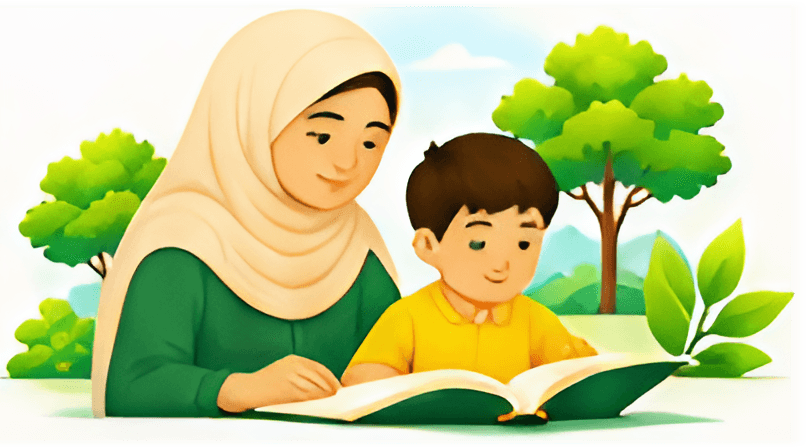
A child’s first language is learned by listening, speaking and being spoken to. Nobody teaches a toddler the definition of a verb. The same is true in the classroom: a language grows when children hear it used well, read it with pleasure and are trusted to use it themselves.
This does not mean grammar is unimportant. It means grammar is best understood as a description of something the child already enjoys, not as a gate that must be passed before enjoyment is allowed.
A child who has loved one good story in Urdu has a reason to learn everything else about the language.
What a Living Urdu Classroom Looks Like
Literature comes first. Stories and poems open each unit, so that language skills are practised on writing worth reading.
Expression is expected. Children speak, retell, argue and write in their own words, and are not limited to copying answers.
Imagination has room. Creative exercises ask “What happens next?” and “What would you have done?”
The teacher is supported. Guidance placed with each lesson helps a teacher lead discussion with confidence.
Why This Matters Beyond the Subject
Urdu carries a literary and intellectual heritage that no translation fully replaces. A student who can read it with ease has a door open to poetry, history and ideas that shaped the society they live in. Teaching Urdu as a living language is therefore more than a method. It is a way of keeping that door open for the next generation.
Key Takeaways
Children need to enjoy a language before they analyse it.
Stories, poems and conversation give grammar something to describe.
Fluent readers of Urdu inherit a tradition, not only a skill.