
Screens That Serve Reading, Not Distraction
A digital library can widen a child’s world of books when it is designed around reading rather than distraction.

Parents are often told that screens are the enemy of reading. The truth is less simple. A screen can pull a child away from books, or it can put more books within reach than any shelf at home could hold. What matters is what the screen was designed to do.
Attention Is the Real Question
Much of what children meet on a device is built to hold attention for as long as possible. Reading asks for the opposite: a calm, unhurried attention that stays with one story. A digital library worth using protects that kind of attention, and does not compete with it.
What to Look For
Books at the centre. The first thing a child sees should be stories, not games, rewards or advertisements.
Illustration that supports the text. Pictures should help a young reader follow the story, not replace the reading.
Listening alongside reading. Hearing a story read aloud while following the words helps early readers connect sound and print.
A place for parents. Adults should be able to see what a child is reading and read along with them.
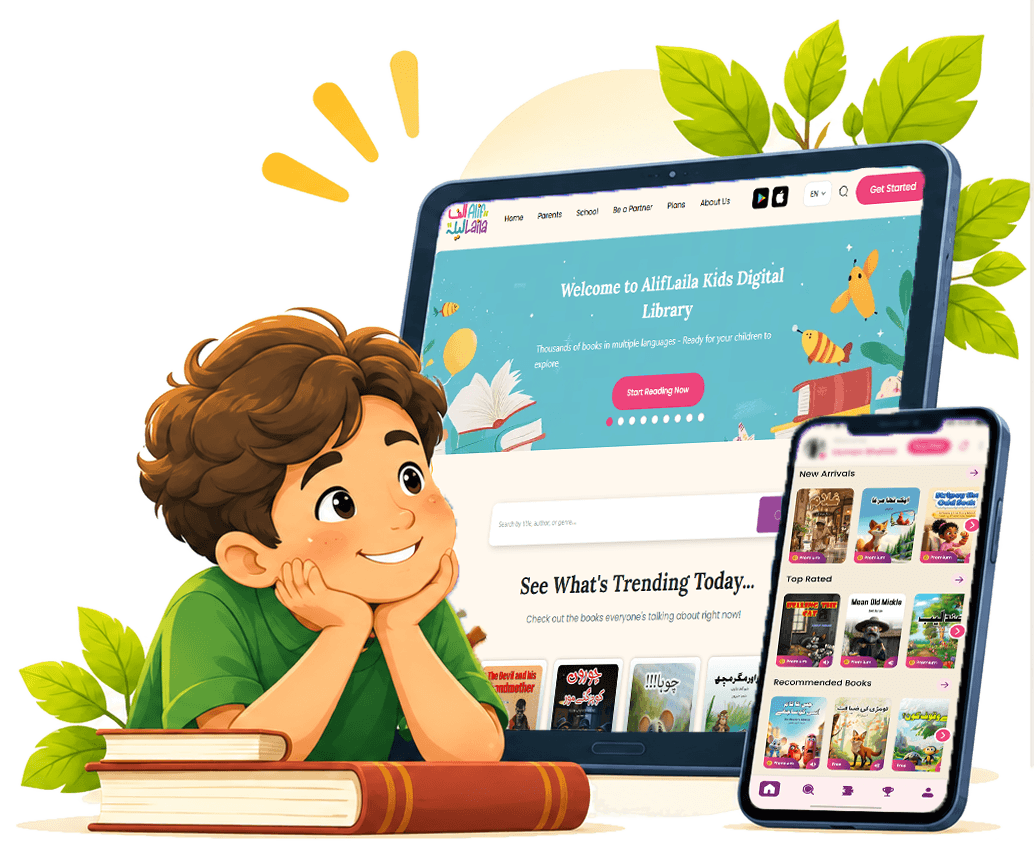
The best children’s screen is the one that makes a child want the next book.
A Shelf, Not a Substitute
A digital library does not replace a printed book, a teacher or a parent’s voice at bedtime. It adds to them. Used with care, it gives children in very different homes the same wide choice of stories, and gives families one more way of reading together.
Key Takeaways
Design decides whether a screen helps or harms reading.
Look for books first, with pictures and audio in support.
Digital libraries extend the bookshelf; they do not replace it.