
Ehya-e-Urdu Series
Building a love of language, understanding, expression and creativity
Introduction to the Series
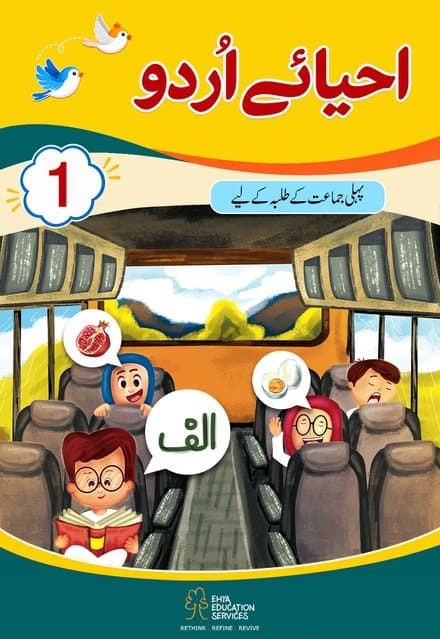
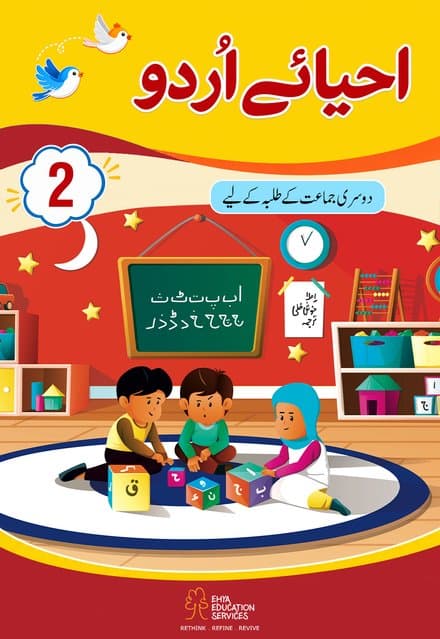
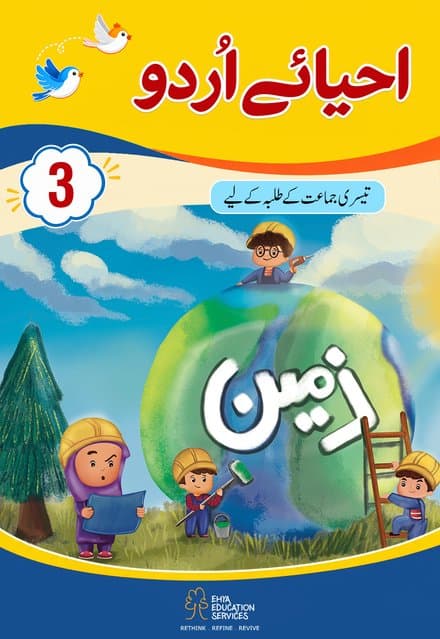
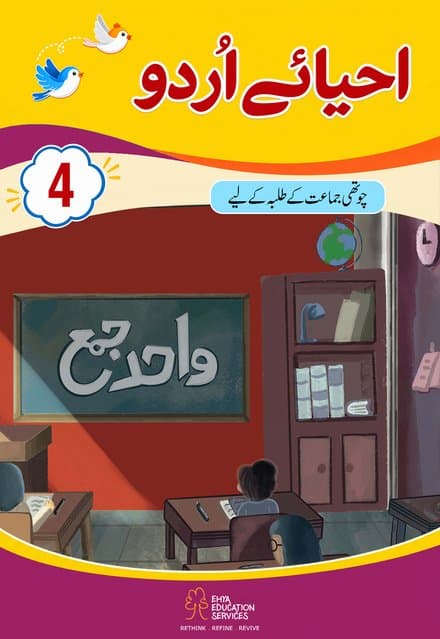
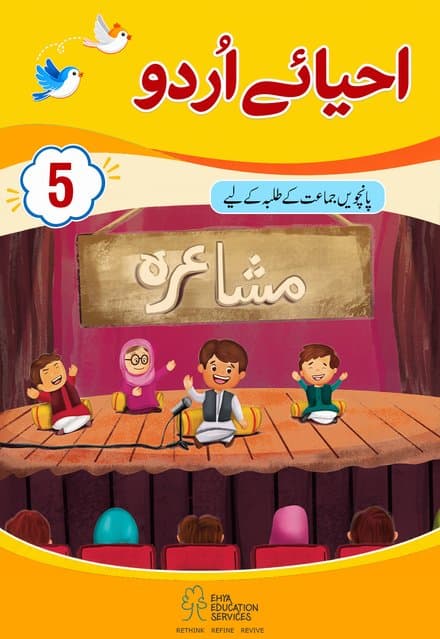
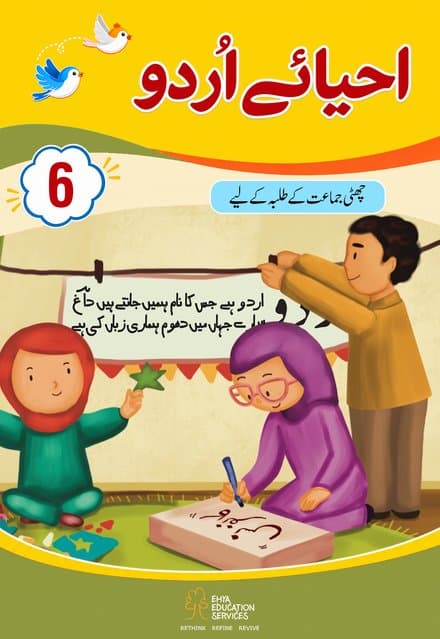
The Ehya-e-Urdu Series is a complete, integrated curriculum for Grades 1 to 8. It aims to develop children’s understanding of Urdu, their ability to express themselves, their literary taste and their creative thinking.
Our Educational Approach
A deep understanding of language is of fundamental importance to every person, because language not only gives voice to our feelings and emotions but is also the means by which we convey what is in our minds to others. Language is likewise one of the great ways in which our aesthetic needs are fulfilled. If a person’s grasp of language is weak, this is not merely an academic shortcoming but an existential one. Such a person can neither perceive deeply nor express deeply.
In the direction our education system has taken over the past several decades, the importance given to language has steadily dwindled until it has almost disappeared. English, being the currency of the age, still carries some weight in this respect, but Urdu, as the weakest limb that bears the brunt, receives attention only as a formality. As a result, neither its content nor its teaching is given any real care. Good children’s literature in Urdu was never plentiful, and in recent decades the situation has declined further. What little remained was finished off by the objective examination system, in which a child who cannot write two correct lines on their own can score 100 out of 100 by rote learning. Scoring that many marks in a language and literature paper would mean that the child’s explanation of the verses was as good as if the poet had written it himself. The result is before us: the generation now studying at university, or already out in working life, generally does not command Urdu even at the level of language skills a fifth-grade child ought to have.
If we look at the Urdu curriculum, it has always appeared to be a collection of social studies and moral lessons. From the very first grade, children are given relatively heavy, dry passages that a young child cannot possibly find interesting. If a book cannot hold a child’s attention, it can never teach them a language. In childhood, the thing in a book that holds attention most is the story: it not only delights the child but also refines their imagination and satisfies their sense of beauty.
In our Urdu books we have consciously tried to make up for these shortcomings. Rather than filling the lessons with topics for the sake of it, we have tried to shape them around children’s interests and in a literary style, so that alongside learning the language, children also develop a love for Urdu literature. The lessons are written as stories so that they do more than pass on a few facts: they spur the child’s imagination, introduce new styles and turns of expression, and keep awakening their aesthetic sense. Beyond the lessons, the exercises include questions that awaken children’s creativity and build their command of the language. We hope teachers will also assess children in their examinations by the standards we have set in the exercises. For teachers’ guidance, each lesson also carries separate instructions so that the book can be used to best effect. Likewise, the design aims to draw children to the book as much as possible. Our experts have worked with great effort and dedication to prepare it, and that is why we are able to present a quality Urdu book from which a child will truly be able to learn “Urdu”.

“Language is the means of a nation’s intellectual life and cultural survival.”